


NEWS
From conversation to action: international cardiovascular leaders call for collective change
Published Date – 7 October 2026
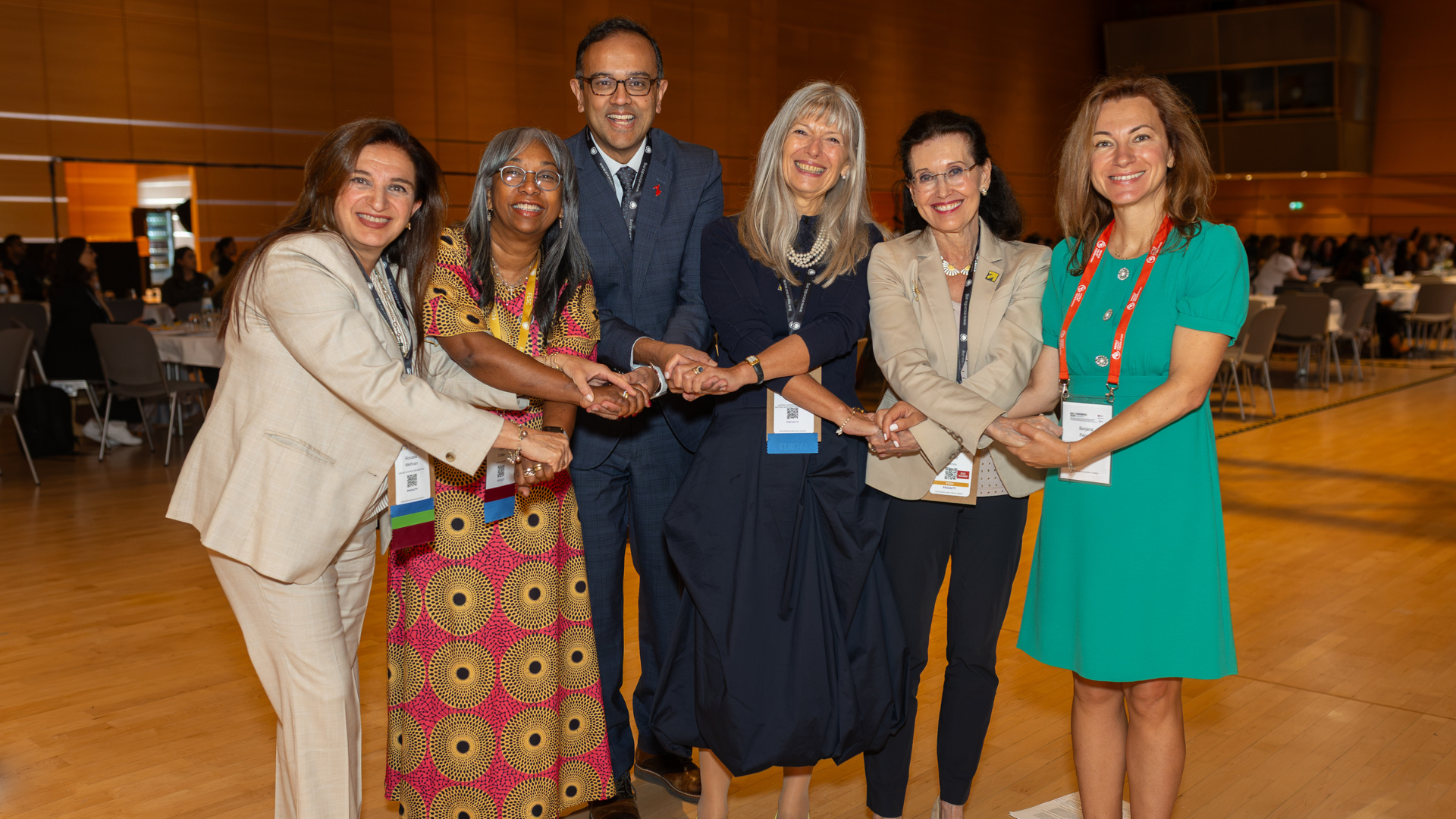
At RISE @ ESC Congress 2026, an international panel of cardiovascular leaders came together to examine a critical question: how can professional societies move beyond conversation and take concrete action to improve women’s health, strengthen women’s leadership, and reduce the global burden of cardiovascular disease?
Moderated by Professor Barbara Casadei, the discussion brought together leaders from the European Society of Cardiology, the American College of Cardiology, the American Heart Association, the World Heart Federation, and the Pan African Society of Cardiology. While each organization operates in a different context, a common message emerged: greater collaboration, accountability and action are essential.
Breaking down silos
Dr. Roxana Mehran, co-founder of Women As One and President of the American College of Cardiology, challenged societies to reconsider how they work together. Despite sharing the mission of reducing cardiovascular disease globally, these organizations have often operated independently.
“We have been working in silos and not really connecting the dots the way we should be if our mission and vision is in promoting and reducing the burden of cardiovascular disease around the globe… this is the time, this is the moment,” she emphasized, calling for societies to connect their efforts and identify areas where collective action could have greater impact.
Dr. Cecilia Linde, President of the European Society of Cardiology, highlighted the influence that professional societies can have when they join forces. With their membership, expertise, and reach, societies can influence policymakers and advocate for policies that improve cardiovascular and women’s health.
At the moment it’s not health for all, it’s health for those who have the resources.
Professor Liesl Zühlke, Vice President of the Pan African Society of Cardiology
“If we join forces like we’re doing, we can actually influence the politicians. We have the science, we have the figures, we have the national party societies and the members,” she said.
The need for this collective approach is particularly urgent in regions where poverty, inequity and limited access to healthcare drive cardiovascular outcomes. Professor Liesl Zühlke, Vice President of the Pan African Society of Cardiology, highlighted the enormous opportunity and significant challenges across Africa, where women face substantial barriers to accessing appropriate care.
“At the moment it’s not health for all, it’s health for those who have the resources. Our continent has got 800 million women, and those are actually the ones who get the least of the healthcare,” she explained.
Turning commitments into measurable progress
The panel repeatedly returned to a practical solution: metrics.
Borjana Pervan, CEO of the World Heart Federation, noted that women currently lead only a minority of member societies. She cautioned against becoming complacent with incremental progress when women represent half of the global population.
“We’re still counting firsts; we’re still counting seconds. And I think it’s [important] that we meet each year, we report on progress, but we should also be looking at what we are missing and to check our backs as we’re moving forward.” Pervan said.
Panelists called for clear, shared targets covering leadership, conference participation, research funding and other opportunities. Metrics should not be reported once; they should be embedded across leadership transitions, so progress continues beyond an individual president’s tenure.
“We should think about it as a business, and in a business you’ve got a strategy, you’ve got a plan, and you’ve got metrics, and you have to hold yourself accountable to those metrics. Each one of us has an opportunity to add in that additional element, but to then make sure it’s a definable metric and we can hold ourselves and those people accountable,” suggested Professor Liesl Zühlke.
Thinking about gender balance, and also in the interview committees who decide eventually who’s going to get a certain position, they also need to be balanced.
Dr. Cecilia Linde, President of the European Society of Cardiology
The European Society of Cardiology provides an example, with a gender policy targeting 40% representation of women in active positions and moving toward a broader approach encompassing gender inclusivity, diversity and geography.
“Thinking about gender balance, and also in the interview committees who decide eventually who’s going to get a certain position, they also need to be balanced… I do believe in the metrics. Every annual report should be giving the numbers for different kinds of active roles,” stated Dr. Cecilia Linde.
Investing in women’s health and women investigators
Research was another central theme. Dr. Manesh Patel, President-Elect of the American Heart Association, emphasized the need to invest in research that addresses unanswered questions across the female life course, including pregnancy, menopause, and cardiovascular disease later in life.
“37-40% of women may die from cardiovascular disease; less than half know that… How do we actually put funding towards those conditions and ways in which we can support the youth and women and the many stages of their lives, where we haven’t asked clinical questions or done the science.” Dr. Manesh Patel said.
The panel also argued that supporting women as investigators and leaders goes hand in hand with improving women’s health research. Women-led research can help ensure that questions relevant to women are prioritized and that more women are enrolled in studies. To do so, pathways must be created for more women to lead clinical studies.
“We also need to get our industry colleagues who are funding these trials to trust women and that they could lead the clinical trial forward,” said Dr. Mehran. “Every time I’m asked to be a PI of a study, I always have a male Co-PI… I think there is this element of, can she deliver?”
We also need to get our industry colleagues who are funding these trials to trust women and that they could lead the clinical trial forward.
Dr. Roxana Mehran, President of the American College of Cardiology
A shared responsibility
The panel emphasized that this cannot be a women-only effort. Improving representation and advancing women’s cardiovascular health will require participation from men as allies, mentors and advocates, alongside women in leadership. It also requires looking beyond physicians to other health professionals, policymakers, industry and communities.
Professor Barbara Casadei closed the conversation with a challenge to our panelists to follow through on their commitments to work together to reduce the global burden of cardiovascular disease, improve representation of women and minorities, and improve access to care: “That will be minuted, and next year you will come back here and report.”
Turn inspiration into action on The Pulse
Connect with women in medicine, explore opportunities and find practical resources to support your career journey.
Latest News

Women As One and Radcliffe Cardiology continue partnership to advance clinical education
News CLIMB Our PartnersOur continued partnership is expanding access to high-quality clinical education for women physicians worldwide.
From guidelines to impact: making quality improvement a reality in cardiovascular care
RISEAt RISE @ ESC Congress 2026 encouraged us to assess and take action to ensure that all patients receive the best cardiovascular care.
From conversation to action: international cardiovascular leaders call for collective change
RISEAt RISE @ ESC Congress 2026, cardiovascular leaders discussed how collaboration, accountability & action are essential to make progress.